Efficient Web-to-Markdown Conversion for RAG Pipelines Without Headless Browsers
A streamlined approach to convert web content into clean Markdown chunks for Retrieval-Augmented Generation pipelines, avoiding the overhead of headless browsers.
CANADA — Retrieval-Augmented Generation (RAG) pipelines often face inefficiencies when converting web content into vector store-ready formats. Raw HTML typically includes navigation menus, cookie banners, and footers, which add noise and unnecessary token costs. A new approach simplifies this process by leveraging plain fetch requests, HTML parsers, and Markdown converters, eliminating the need for resource-intensive headless browsers.
The method involves fetching HTML content, identifying the main content using semantic selectors, and removing non-essential elements like navigation menus and footers. A key heuristic ensures that only meaningful content is retained by checking for a minimum text threshold and filtering out link-heavy blocks. This approach is particularly effective for documentation sites, blogs, and help centers.
Once the main content is isolated, it is converted to Markdown using tools like Turndown, with custom rules to handle specific elements such as tables. The resulting Markdown chunks are then prepared for vector storage by ensuring all links are absolute, making them useful even when detached from their original context. This streamlined process reduces computational overhead and improves retrieval accuracy.
The technique is demonstrated with real-world examples, showcasing its effectiveness on public documentation pages. While the approach works well for most content-rich sites, it acknowledges limitations where dynamic content requires more advanced tools. This method offers a faster, cheaper, and simpler alternative to traditional headless browser-based solutions. Reported with files from DEV Community.
 News
Ollama Local LLM Gains Monitoring Tools for Production Use
Developers adopting Ollama for local LLM deployment now have guidance on monitoring metrics, logs, and traces as usage scales beyond personal projects.
 News
GitHub Merge Queue Test Shows Tradeoffs for AI Coding Agent Workflows
Benchmark reveals merge queues eliminate rejected pushes but add latency when coordinating multiple AI agents on a single codebase
 News
Developers Can Improve Online Presence with Person Schema and Wikidata
A software developer shares practical steps to help Google connect disparate online profiles into a unified knowledge panel.
 News
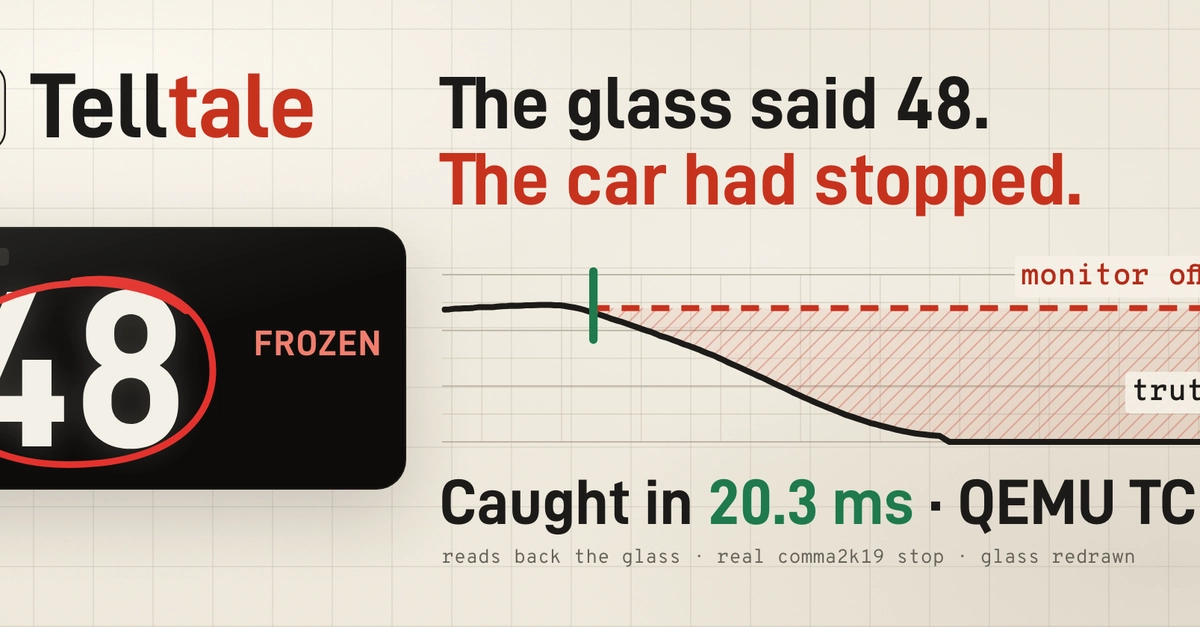
QNX 8.0 Tool 'Telltale' Detects False Instrument Reads in Real-Time
Open-source monitor verifies automotive display accuracy by reading back pixels, addressing critical safety gaps in renderer processes